How to Build an Employee Onboarding Process That Actually Sticks
A new hire's first week sets the tone for whether they stay. Here's how to build onboarding that's organised, consistent, and human — without grand gestures or big budgets.
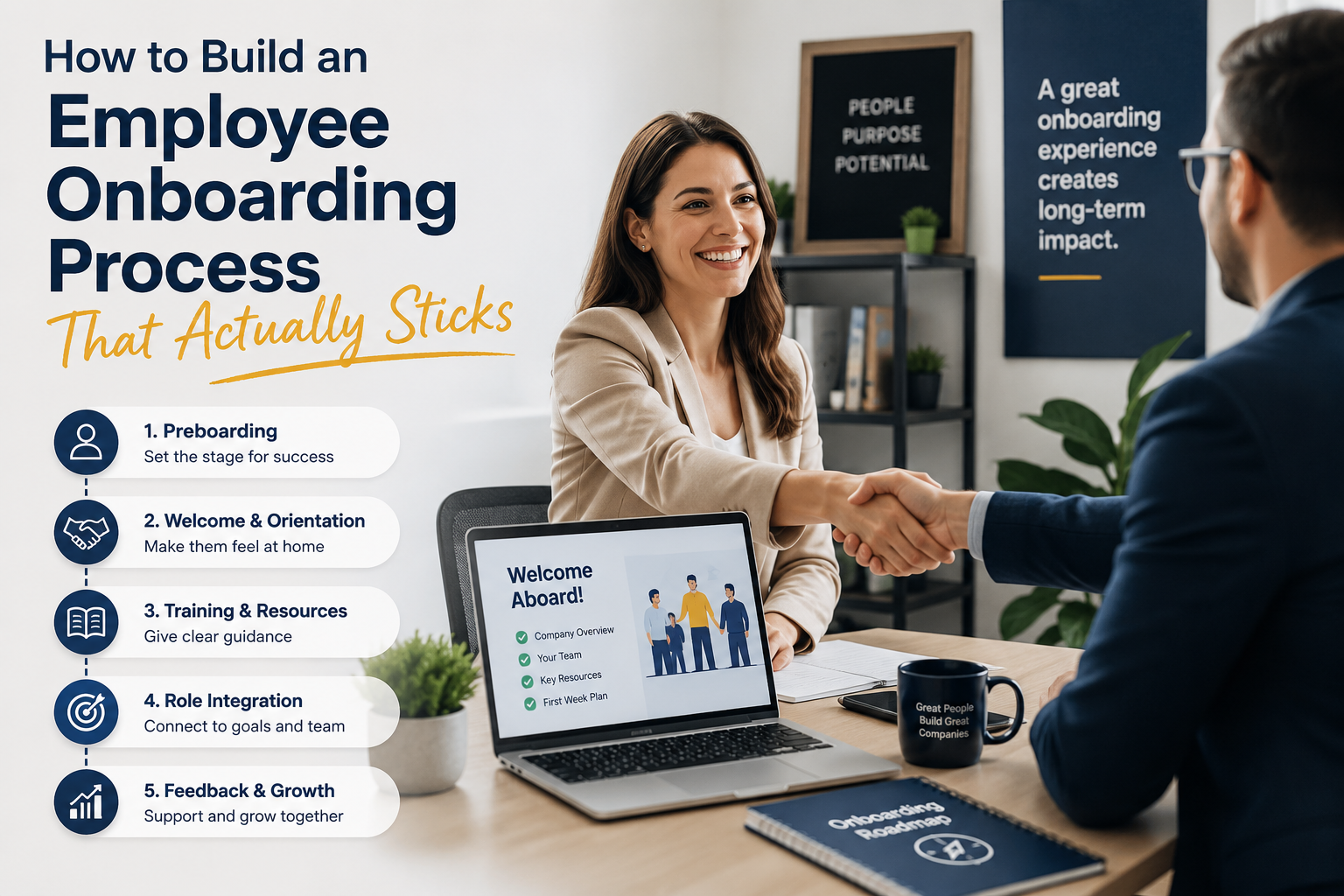
Ask most people about their worst job experience and a surprising number will start with the first week. The laptop that wasn't ready. The manager who was in meetings all day. The vague "just read through these docs and let me know if you have questions." The quiet, sinking feeling of having made a mistake by joining.
Onboarding is the most underrated process in any growing company. It's the new hire's first real experience of how you operate, and it sets the tone for everything that follows — how quickly they become productive, how connected they feel, and, increasingly, whether they stay at all. Studies consistently link a strong onboarding experience to higher retention and faster time-to-productivity, while a poor one is one of the most common reasons people leave within the first year.
The good news is that great onboarding isn't about grand gestures or expensive perks. It's about being organised, intentional, and consistent — turning a process that usually depends on one person remembering everything into something that runs the same way every time. Here's how to build onboarding that actually sticks.
Start before day one
The biggest mistake companies make is treating onboarding as something that begins on the new hire's first morning. By then, you've already missed the most anxious, most impressionable window: the gap between accepting the offer and walking through the door.
That period — often called preboarding — is where you either build momentum or let it leak away. A new hire who hears nothing for three weeks after signing starts to second-guess the decision. A new hire who gets a warm welcome email, their schedule for the first week, the paperwork sorted in advance, and a note from their future manager arrives on day one already feeling like they belong. The practical goal of preboarding is simple: handle everything administrative before they start, so day one can be about people rather than forms. Contracts signed, accounts requested, equipment ordered, first-week calendar shared. Get the boring stuff out of the way early and you free up the moment that matters most.
Make day one about belonging, not paperwork
The first day should be memorable for the right reasons. When someone's strongest memory of day one is filling in tax forms alone at an empty desk, you've wasted it. When it's a tidy workspace, a working login, a manager who cleared their morning, a team lunch, and a clear sense of what they'll be doing, you've started a relationship well.
This is mostly about preparation and attention, not budget. Make sure their equipment and access genuinely work before they arrive — nothing deflates a new hire faster than spending day one waiting for IT. Have their manager present and available, not buried in back-to-backs. Introduce them to the people they'll work with most closely, and give them one small, achievable task so they end the day feeling useful rather than overwhelmed. The message you want to send on day one is "we were expecting you, we're glad you're here, and we're organised" — and that message is delivered almost entirely through preparation.
Turn the checklist into a workflow
Here's the operational heart of onboarding, and where most companies quietly fail. Onboarding is a sequence of tasks that should happen identically for every new hire — create the employee record, set up accounts, issue equipment, assign policies to sign, schedule introductions, enrol them in payroll, book training. When that sequence lives in one person's head or a personal checklist, it works right up until that person is busy, on holiday, or has left. Then steps get missed, and the new hire pays for it.
The fix is to turn the checklist into a defined workflow that the system runs for you. When a new hire is added, the right tasks are created automatically and assigned to the right people — IT gets the equipment task, the manager gets the introduction task, HR gets the policy task — each with a due date, and someone can see at a glance what's done and what's outstanding. The difference this makes is enormous: nothing depends on memory, every new hire gets the same complete experience, and you can scale from onboarding one person a quarter to onboarding ten a month without the wheels coming off. This is exactly the kind of repeatable, rule-based process that benefits most from being systematised rather than improvised.
Think in terms of the first 90 days, not the first week
Onboarding doesn't end when the laptop is set up. The most common failure after a decent first week is to drop the new hire into the deep end and hope they swim. Real onboarding extends across the first month to the first ninety days, and it works best when those days have a loose structure.
A simple framework helps: the first week is about orientation and setup, the first month is about learning the role and the tools and building relationships, and the first ninety days are about reaching real productivity and the first proper performance conversation. You don't need an elaborate program — you need clear expectations at each stage, regular check-ins (not just one awkward review at the end), and a manager who is paying attention. The goal is that at no point does the new hire feel abandoned or unsure whether they're doing well. A short weekly check-in for the first month, with honest two-way feedback, prevents most early problems and catches the rest before they become resignations.
Give managers a role and the tools to play it
Onboarding succeeds or fails on the manager, and yet managers are often the least prepared part of the whole process. A great HR onboarding workflow means nothing if the new hire's manager doesn't know they're supposed to do a first-day welcome, set thirty-day goals, or run weekly check-ins.
So make the manager's part explicit. Give them a simple checklist of their own — what to do before day one, on day one, in week one, and across the first ninety days — and build those tasks into the same system that's running the rest of onboarding, so the manager gets prompted rather than relying on instinct. The best onboarding experiences feel personal and human, but they're underpinned by structure that makes sure the human moments actually happen. Managers want to do right by their new hires; most of the time they just need to be reminded what "right" looks like and when.
Measure whether it's working
You can't improve what you don't look at. Most companies have no idea whether their onboarding is good or bad beyond gut feel. A few simple signals tell you a lot: how long it takes a new hire to become productive, how new hires rate their first thirty days in a short survey, and what your early attrition looks like — how many people leave within the first three to six months, and why.
You don't need a sophisticated analytics program. A quick survey at thirty and ninety days ("how prepared did you feel?", "did you have what you needed?", "what was missing?") gives you honest, actionable feedback, and tracking early attrition tells you whether the experience is translating into retention. Treat onboarding as a process you refine, not a one-time setup, and it will keep getting better.
Don't forget the other end
It's worth saying briefly that the same discipline applies in reverse. Offboarding — when someone leaves — is onboarding's mirror image, and it's even easier to get wrong because it's emotionally awkward and nobody owns it. The same workflow approach applies: a defined sequence that revokes access, recovers equipment, handles final pay, and captures knowledge, run by the system rather than left to memory. Getting offboarding right protects you from security gaps and leaves departing employees as advocates rather than critics. A company that handles both ends of the employee journey well is one that people trust.
Putting it together
Strong onboarding comes down to a few principles: start before day one, make the first day about people rather than paperwork, turn your checklist into a workflow so nothing depends on memory, extend the experience across ninety days, give managers a clear role, and measure the result. None of it is expensive. All of it is a matter of being organised and intentional — which, for a growing company, is mostly a question of having the right system underneath.
That's where a platform helps. Momentumpro turns onboarding (and offboarding) into a repeatable workflow: add a new hire and the right tasks are created and assigned automatically, documents and policies are sent and tracked, equipment and access are accounted for, and managers get prompted to play their part — all in the same place as the rest of your people operations. The result is that every new hire gets the same organised, welcoming start, no matter how fast you're growing or who's on holiday that week.
First impressions only happen once. A little structure makes sure yours is a good one.
Want onboarding that runs itself? Explore Momentumpro or start a free trial today.